

 Print
PrintWhy precision tooling is becoming one of manufacturing’s most exciting career paths
There is a hidden world inside modern manufacturing where the future is being shaped in details most people will never see. It is not always the nosiest part of the factory, the biggest machine on the floor, or the finished device that appears in a hospital, a data center, a car, a communications network, or an advanced electronics assembly.
It is the tooling shop.
More specifically, it is the precision micro mold tool shop, the engineered heart of a process capable of producing parts smaller than a grain of rice, features measured in microns, and components that help power some of the most important technologies of our time.
For anyone looking for a career that combines craftsmanship, engineering intelligence, problem-solving, technology, and real-world impact, precision tooling deserves serious attention. It may be one of the most under-rated career paths in advanced manufacturing today.
At Accumold, tooling has always been central to what we do. As demand for high-precision micro molded components grows across medical devices, micro-electronics, optics, sensors, communications, and emerging technologies, the role of the toolmaker has never been more important. The world is asking for smaller, smarter, more reliable products. These products cannot exist without the people who know how to build the tools that make them possible.
TOOLING IS WHERE IMPOSSIBLE BECOMES MANUFACTURABLE
In micro molding, product success does not begin when plastic enters the mold. It begins much earlier, when a team works out how a complex design can become a repeatable manufacturing process.
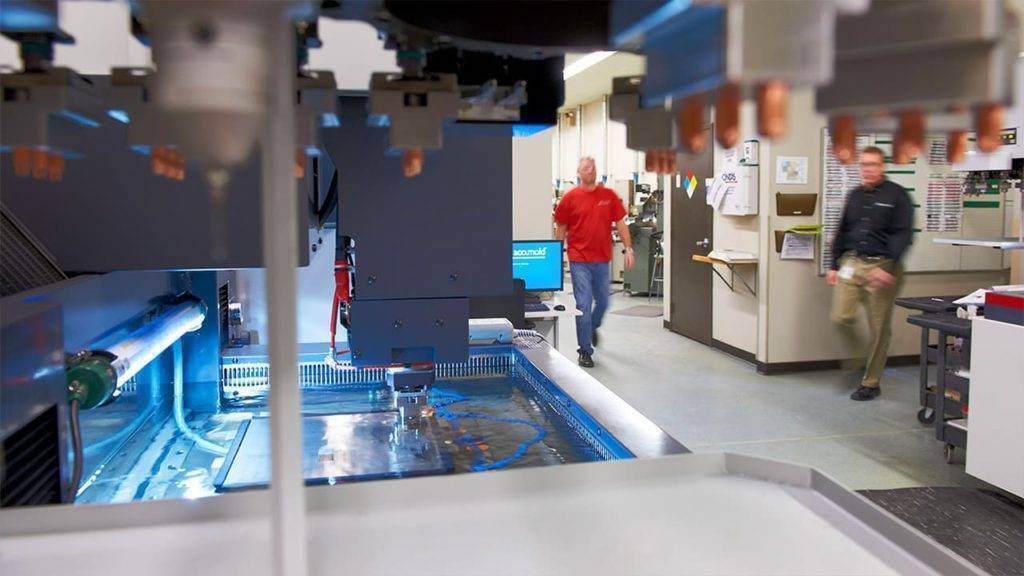
A micro mold is not simply a piece of steel with a cavity cut into it. It is a precision system. It must manage material flow, venting, gating, alignment, ejection, thermal behavior, surface finish, and long-term repeatability. It must perform reliably across thousands, millions, or even billions of cycles. It must often hold details that are difficult to see without magnification. It must be engineered so that the finished part does exactly what the customer’s application requires.
That is why toolmaking is not just a technical trade. It is a creative discipline.
Good toolmakers are not simply following instructions. They are interpreting designs, anticipating problems, working with engineers, understanding materials, and making decisions that can determine whether a product scales successfully or stalls. They are the people who turn ambitious ideas into production reality. In an era where many people talk about innovation as if it lives only in software, tooling is a reminder that physical innovation still matters. Hugely.
SMALL PARTS, LARGE IMPACT
One of the most exciting aspects of precision tooling is the range of industries it touches.
A toolmaker working in micro molding may help enable a new medical device that makes treatment less invasive. They may support a diagnostic component that helps clinicians get faster answers. They may contribute to micro-optic parts used in sensing and imaging. They may help manufacture components used in electronics, fiber optic connectivity, wearable technologies, or devices that support the next generation of digital infrastructure.
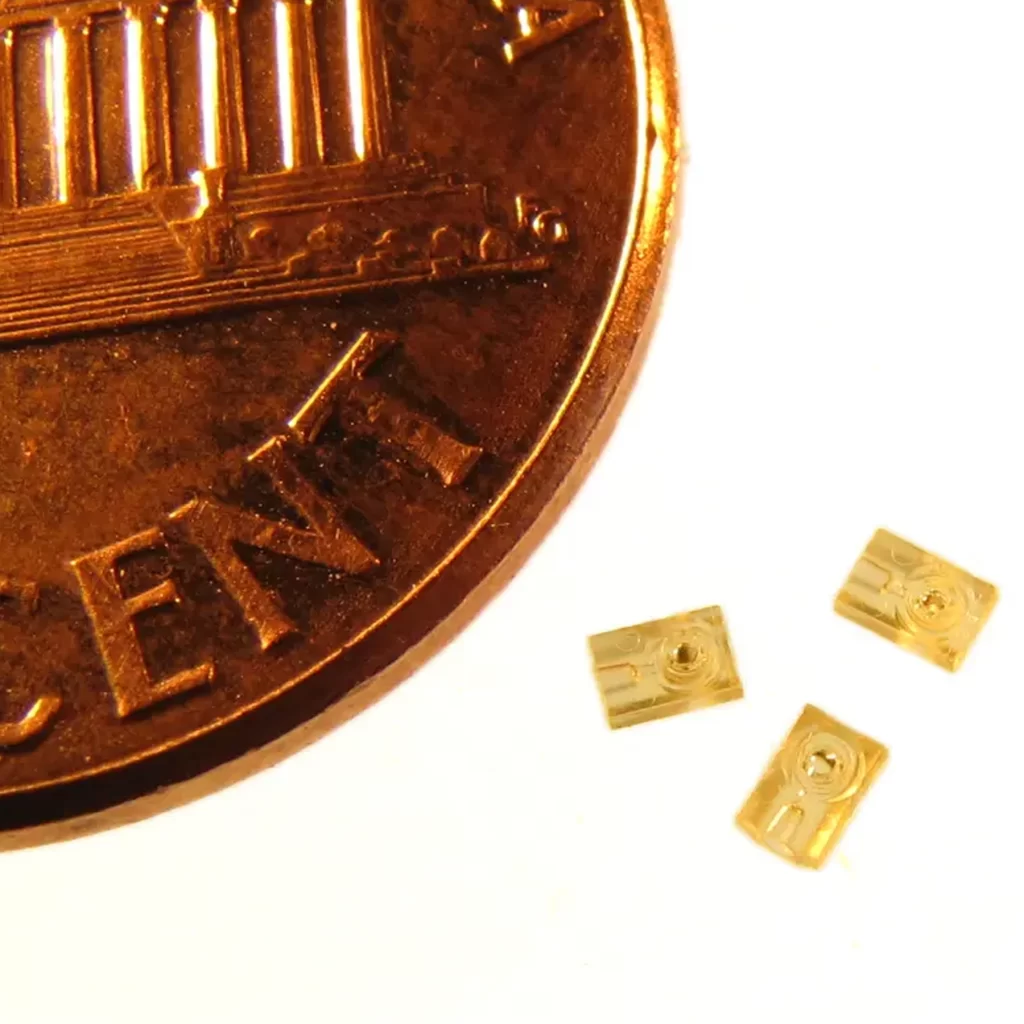
The part may be tiny, but its impact can be enormous. This is a compelling reason to consider tooling as a career. It is hands-on, but not old-fashioned. It is precise, but not repetitive in the way people often imagine manufacturing to be. It sits at the intersection of advanced machinery, digital design, materials expertise, craftsmanship, and problem-solving.
For the right person, it offers the satisfaction of making something difficult, and making it work.
A CAREER FOR PEOPLE WHO LIKE SOLVING PUZZLES
Precision tooling attracts a particular kind of mind. It suits people who enjoy detail. People who like asking, “Why did that happen?” People who are patient enough to chase the root cause of a problem, but practical enough to solve it. People who like working with advanced equipment, but also understand that experience and judgment still matter.
There is something deeply satisfying about tooling because the work is tangible. You can see the result of your decisions. You can follow a challenge from drawing to tool to molded part to production. You can watch a difficult project come together because of choices you helped make.
At micro scale, the puzzles are especially interesting. How do you create a tool that can form a feature only a few microns across? How do you maintain alignment when tolerances are incredibly tight? How do you build a tool that can run at volume without drifting from specification? How do you design for ejection when the part is delicate? How do you polish, machine, or finish a surface that affects the performance of a medical, optical, or electronic product?
These are not routine questions. They are the kind of questions that make tooling a lifelong learning career.
TECHNOLOGY HAS MADE TOOLING MORE EXCITING, NOT LESS
There is sometimes a misconception that automation, additive manufacturing, and digital tools reduce the need for skilled toolmakers. In reality, the opposite is true in advanced micro manufacturing.
Modern toolrooms use sophisticated equipment, advanced machining strategies, EDM, precision measurement, digital workflows, and close links between design, automation, production, and quality. The toolroom is a also controlled work environment because the temperature can change the dimensions of the steel being worked on. But the value of these technologies depends on the people who understand how to apply them. Technology does not replace tooling expertise. It amplifies it.
A modern precision tooling career is not about standing still. It is about continuous learning. It is about combining hands-on skill with digital capability. It is about understanding both the machine and the material, both the model and the finished part. The best toolmakers are not being left behind by manufacturing’s evolution. They are helping lead it.
This is especially true in micro molding, where tooling is often the difference between something that looks feasible in CAD and something that can actually be manufactured repeatably at scale.
WHY ACCUMOLD IS AN EXCITING PLACE TO BUILD THAT CAREER
Accumold operates in one of the most dynamic areas of manufacturing. The company’s growth is being driven by customers pushing the limits of miniaturization in demanding markets. That growth creates opportunity, not just for the business, but for people who want meaningful careers inside it.
For tooling professionals, Accumold offers the chance to work on challenging projects that are rarely ordinary. The work is precise, technical, and connected to real applications. It is also collaborative. Tooling is not isolated from the rest of the process. It sits alongside design for micro manufacturing, production, automation, metrology, and quality, all working toward the same goal, making highly complex micro components consistently and at scale.
That environment matters. It means tooling experts can see the full impact of their work. They are not anonymous contributors in a disconnected chain. They are central to projects that require genuine expertise.
It also means there is room to grow. Precision tooling rewards experience, curiosity, and commitment. The more you learn, the more valuable you become. For people who want progression, technical challenge, and purpose, this is a powerful combination.
THE FUTURE NEEDS TOOLMAKERS
Manufacturing is changing quickly. Products are getting smaller. Applications are becoming more demanding. Customers need suppliers that can move fast, scale reliably, and solve problems early. Behind all of that is a simple truth, advanced manufacturing still depends on advanced toolmaking.
The next generation of medical devices, micro-optics, sensors, electronics, and high-performance components will not be made by chance. They will be made by people with the skill to build the systems that make precision repeatable. A career in tooling should be seen for what it is, not a fallback, not a hidden trade, and certainly not yesterday’s manufacturing job. It is a front-line role in the future of production.
At Accumold, we believe the smallest tools are helping build the biggest futures. For people who want to work with their hands, think with precision, solve difficult problems, and contribute to technologies that matter, precision tooling is not just a job. It is one of the most exciting places to build a manufacturing career.
The parts may be microscopic. The career potential is anything but.